


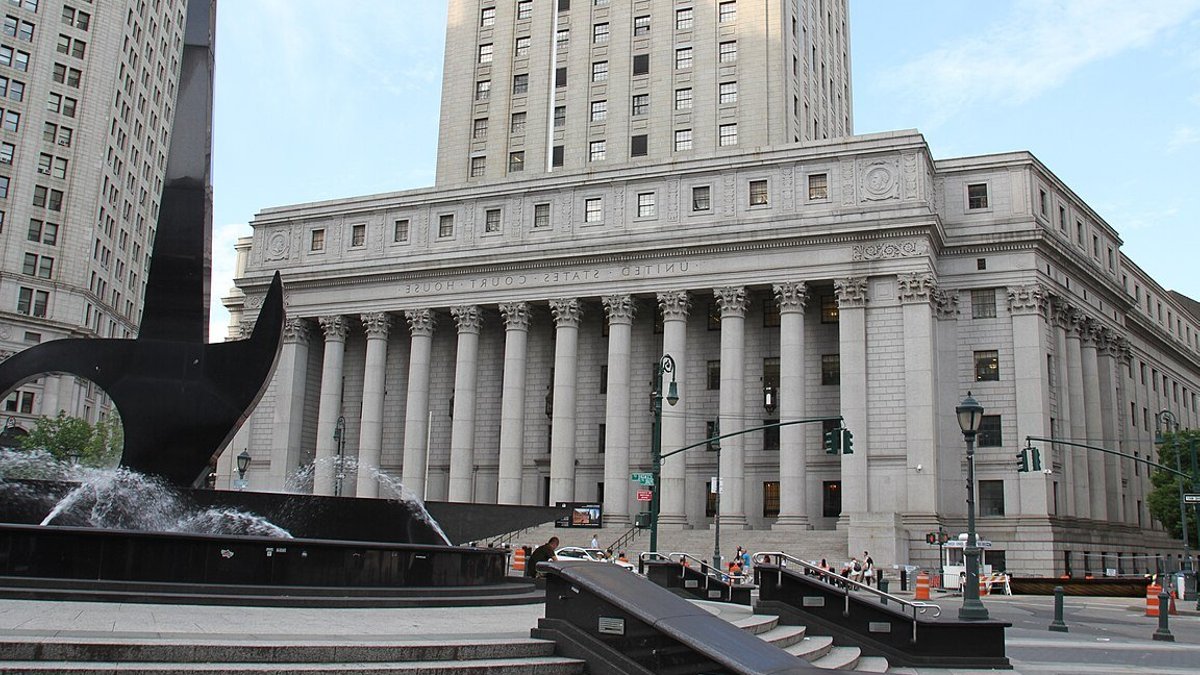
On April 21, the U.S. Court of Appeals for the Second Circuit issued a split opinion in United States v. Akayed Ullah, overturning the defendant’s conviction under the material support statute while leaving his life sentence intact.
Ullah’s Attack and Original Conviction
On the morning of Dec. 11, 2017, Akayed Ullah entered the Port Authority subway station in Manhattan with a homemade bomb and detonated it, injuring himself and several commuters. He later told investigators he acted “on behalf of the Islamic State.” A federal jury found him guilty of providing material support to ISIS and other charges, and a Southern District judge sentenced him to life imprisonment.
Ullah, a Bangladesh‑born immigrant who arrived in the United States in 2011, had been exposed to ISIS propaganda online since 2013. He never met an ISIS member, but he did follow the group’s public calls to carry out attacks in the United States, building his bomb from Christmas lights, a nine‑volt battery and metal screws. The bomb caused minor injuries, but the attack showed how a lone individual could act on extremist messaging.
Statutory Interpretation at Issue
The material support statute, 18 U.S.C. § 2339B(a)(1), criminalizes knowingly providing “things, personnel, or services” to a foreign terrorist organization (FTO). The statute’s personnel provision requires a defendant to “work under that organization’s direction or control.” In Holder v. Humanitarian Law Project, the Supreme Court limited “services” to acts coordinated with an FTO.
Related: Jan. 6 Pardons Recipients Face Other Charges
Ullah’s conviction rested on two theories: that he supplied himself as “personnel” to ISIS and that his bombing constituted a “service” for the group. The appellate majority held that inspiration alone does not satisfy the “direction or control” requirement. The judges wrote that Ullah acted “entirely independently,” and therefore the statutory exception for lone actors applied.
The split highlights a disagreement over how much coordination is needed for a material‑support charge.
The ruling may influence future cases.
From a broader view, the decision could reshape how prosecutors pursue cases where attackers are radicalized online but lack direct contact with a terrorist group. The law has long been a cornerstone for early intervention, allowing authorities to intervene before an attack materializes. If courts require tangible communication, many investigations may stall until the suspect either contacts an FTO or commits another chargeable offense.
Related: Mengenal Kanker Sarkoma seperti yang Diidap Alice Norin
Potential Effects on Counterterrorism Efforts
Requiring direct contact may limit the government’s ability to obtain search warrants under § 2339B, forcing reliance on other statutes that often demand proof of a specific weapon or a more concrete terrorist act. This could slow investigations, especially when suspects use encrypted apps like Telegram, making the establishment of a “connection” more difficult.
Moreover, the decision may affect discovery in national‑security cases. Intelligence agencies might be less inclined to share information that indicates an absence of direct links, potentially creating tension between the intelligence community and prosecutors.
In practice, the rise of online radicalization means many attackers fit the “lone wolf” profile the court described, even though they are part of a larger, digitally coordinated ecosystem. This reality suggests that the legal definition of “direction” may need to evolve to reflect the ways terrorist groups now inspire violence without direct orders.

