


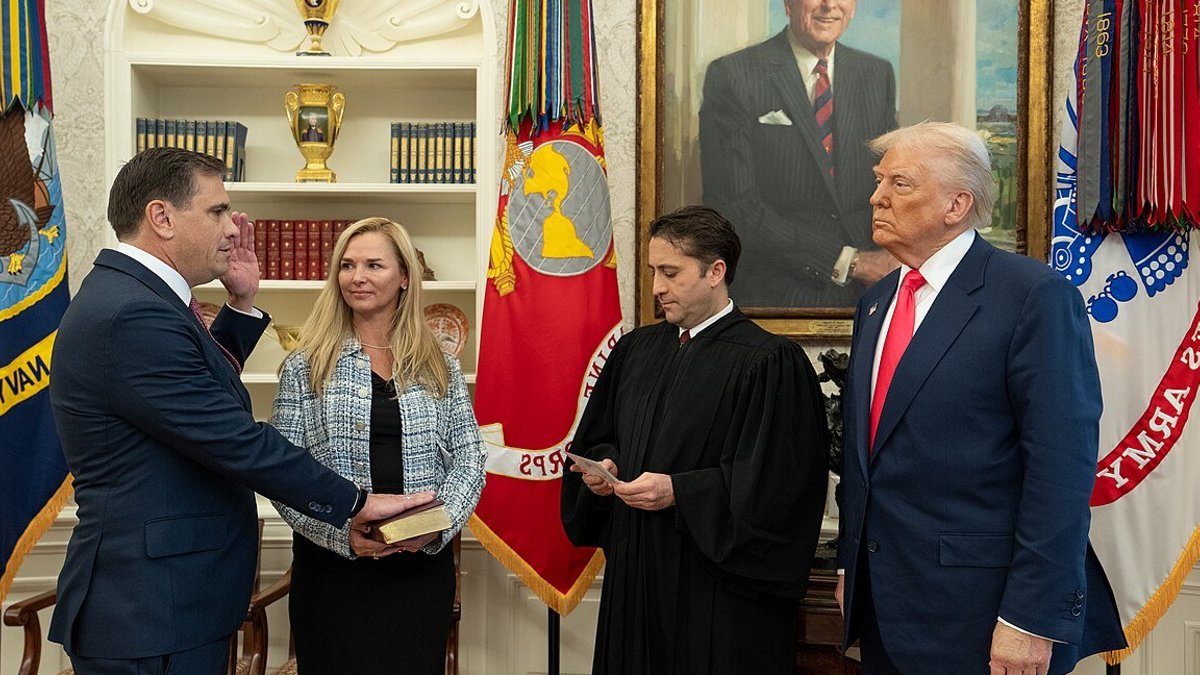
President Trump has nominated Acting Attorney General Todd Blanche for the top job, but Senate Republicans remain undecided on a confirmation fight. The nomination, if successful, would be straightforward enough. However, the legal setting suggests Blanche could remain in charge regardless of the Senate vote. Under the Attorney General Succession Act, codified at 28 U.S.C. § 508, the Deputy Attorney General is empowered to exercise the duties of the top post if a vacancy occurs.
Biden’s Precedent on Unconfirmed Nominees
This situation mirrors an event from the previous administration. In March 2023, Labor Secretary Marty Walsh resigned, and Julie Su took over as acting secretary under a similar law. Despite no path to confirmation due to opposition from Sens. Joe Manchin and Kyrsten Sinema, Su remained in the role until President Biden left office. The White House chose to rely on statutory succession rather than forcing a final vote on the Senate floor.
Critics were not pleased, with Representative Virginia Foxx raising concerns about legal compliance. The Government Accountability Office responded that Su was permitted to serve under the specific statute. This precedent provides a roadmap for how Blanche might operate if his own nomination stalls.
It is strange that Trump bothered with the nomination at all if the law already allows him to keep Blanche. Usually, administrations try to clear the deck for a confirmed official to avoid these messy legal limbo situations. However, the “Germaneness” doctrine suggests Congress anticipated this specific chain of command when they confirmed Blanche as Deputy AG.
Related: Trump and DOJ face legal disputes
Legal Limits and the Appointments Clause
The Federal Vacancies Reform Act of 1998 usually sets strict time limits on acting officials. However, Section 3347 of that act identifies specific “nonexclusive” lists of statutes that override those limits. The Succession Act is one of those listed exceptions. Courts have consistently ruled that these specific statutes, including the one governing Su, take precedence over the FVRA’s timetables.
If the FVRA applied in Blanche’s case, the timeline would still be quite generous. He could serve for 210 days plus the duration of pending nominations. Even with that clock running, a potential second term for Trump or a prolonged deadlock could allow him to serve until 2027. The more pressing legal question involves the Constitution.
An Appointments Clause challenge might argue that Blanche, as an acting official, cannot serve for nearly three years. In a 2022 decision, the Sixth Circuit ruled that an acting head of the Federal Housing Finance Agency violated the clause by serving for three years. However, the Court distinguished that case because the official in question, Edward DeMarco, had not been confirmed to the position he was raised from.
The Supreme Court has ruled that Congress can assign additional duties to confirmed officers as long as those duties are “germane” to their original office. Since the Deputy Attorney General oversees the entire Justice Department, assuming the Acting Attorney General role is a logical extension of that role. This suggests that a legal challenge based on the Appointments Clause is unlikely to succeed against Blanche.
Related: The Fascinating Role of Gemstones in Traditional Medicine
Who Is Next?
If the Senate rejects Blanche, Trump is not short on options. The administration could turn to other MAGA favorites like Harmeet Dhillon or Jeanine Pirro. There is even talk of Bill Pulte, currently serving as acting director of national intelligence, or a return for Matthew Whitaker.
It is possible that Trump might use a temporary replacement as leverage to force a vote on Blanche. Conversely, he might simply replace his deputy with someone else to pressure the Senate. Regardless of the maneuvering, the law provides a clear path for Blanche to remain in place long after the confirmation vote.
“She’s doing a great job so I’m not in a hurry to get her confirmed at this point,” said Sen. Tammy Duckworth in July 2023 regarding Julie Su. Shorn of context, that line sounds absurd. But it makes perfect sense where the laws allow nominees to perform their jobs without regard to the will of the Senate.

